Smarter Layouts and Storage: Planning Kitchens for Everyday Movement and Comfort
Today’s kitchens are no longer just cooking zones—they function as shared spaces for meals, conversation, and even work. Because of this shift, homeowners are moving away from completely open layouts and toward more practical “defined-open” designs. Partial walls, glass dividers, or tall cabinetry help separate functions while still allowing light and openness.
Kitchen islands continue to dominate modern layouts, but their purpose has expanded. Instead of serving only as prep areas, islands now support dining, studying, and entertaining. To keep movement smooth, designers recommend allowing around 42 inches of clearance for a single cook and up to 48 inches for two, which helps prevent congestion and improves safety. Rather than relying only on the traditional work triangle, many kitchens are organized into clear zones—preparation, cooking, baking, cleaning, and storage—so tasks feel more intuitive.
Storage solutions are also becoming smarter and more efficient. Deep pull-out drawers make cookware easier to access, while tall pantry units keep food visible and organized. Corner cabinets are no longer wasted space, thanks to swing-out or rotating shelves. Vertical dividers neatly store trays and cutting boards, and drawer inserts help maintain order over time. To reduce visual clutter, appliance garages hide everyday items while keeping them within reach. A thoughtful mix of closed cabinets and limited open shelving adds balance, combining practicality with personality.
Comfort matters just as much as function. Seating areas are designed with usability in mind, offering enough legroom and counter overhang for relaxed use. In tighter kitchens, peninsulas provide similar benefits without disrupting traffic flow. Adequate landing space near appliances and layered lighting—general, task, and ambient—complete the layout, resulting in a kitchen that feels natural to use from morning to night.
Sustainable Materials and Energy Efficiency: Kitchens Built for Long-Term Use
Sustainability has become a priority in kitchen renovations, driven by environmental awareness and the desire for durability. Homeowners are choosing materials that last longer and require fewer replacements. Solid cabinet frames with quality plywood boxes tend to perform better in humid kitchen environments, while cabinet refacing offers a waste-reducing alternative when existing structures are still sound. Low-VOC paints and finishes are increasingly preferred, helping maintain healthier indoor air quality.
Countertop options now balance style with performance. Engineered stone remains popular for its resilience, while porcelain slabs offer heat resistance and a sleek appearance. Recycled glass surfaces add visual interest while supporting eco-friendly practices, and responsibly sourced wood introduces warmth when properly maintained. These choices reflect a shift toward materials that age well rather than chase short-lived trends.
Energy efficiency plays a major role in modern kitchens. New appliances use significantly less water and electricity than older models, reducing monthly costs over time. Induction cooktops are gaining traction due to their fast heating, precise control, and higher energy conversion. LED lighting has become standard, consuming less energy while lasting far longer than traditional bulbs. Water-saving faucets and thoughtful sink placement further improve efficiency without compromising usability.
Sustainability also means planning ahead. Hardware that can be adjusted or replaced, modular cabinetry that allows future changes, and composting solutions integrated into storage all support long-term functionality. By considering the full life cycle of materials and appliances, homeowners create kitchens that remain practical, efficient, and relevant for years.
Finishes and Aesthetics: Timeless Colors, Textures, and Visual Balance
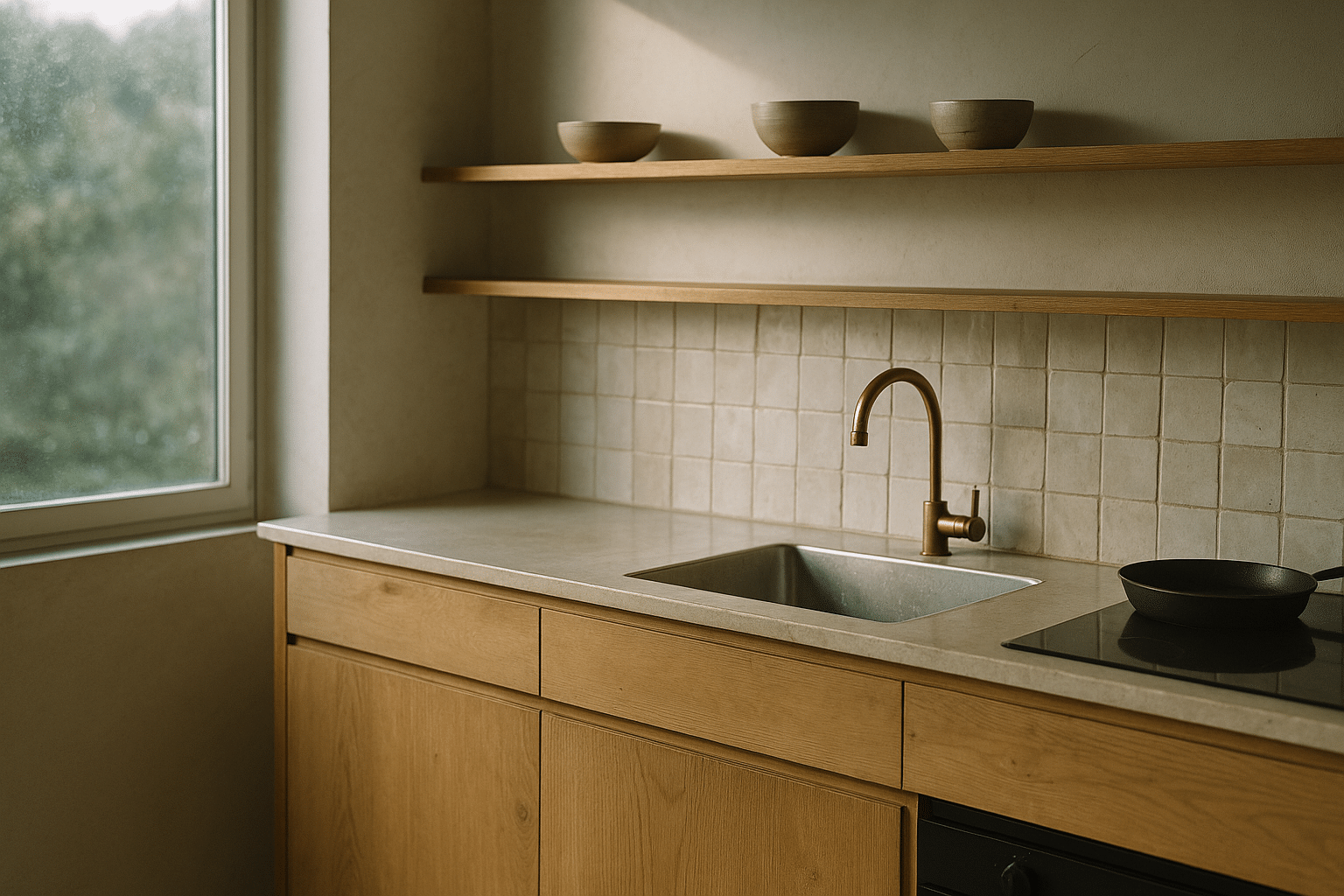
Modern kitchen design is leaning toward calm, welcoming aesthetics that feel comfortable rather than showy. Warm neutral tones—such as soft beige, taupe, and muted earth shades—form the foundation, often paired with gentle greens or subdued blues. Natural wood finishes, especially oak and walnut, are making a strong return, adding depth and texture without overwhelming the space.
Matte and satin finishes are preferred for cabinets and surfaces because they reduce glare and hide fingerprints. Metal accents are commonly mixed, but with restraint—brushed brass, blackened steel, and stainless steel appear in coordinated repeats to maintain visual harmony. Large-format backsplash materials reduce grout lines and simplify cleaning, while subtly textured tiles introduce movement without looking busy.
Designers are also paying attention to how color is distributed. Darker tones are often limited to islands or tall cabinets to anchor the room visually, while lighter counters and walls keep the space open. Flooring choices focus on durability and ease of maintenance, supporting the kitchen’s role as a high-traffic area. Thoughtful lighting choices bring everything together, ensuring the space looks balanced during both busy mornings and relaxed evenings.
Technology and Multiuse Functionality: Convenience Without Complexity
Technology in modern kitchens is becoming more discreet and practical. Instead of flashy gadgets, homeowners are choosing systems that quietly improve daily life. Motion-activated lights, water-leak sensors, and temperature alerts help prevent small issues from becoming costly problems. Smart lighting and appliance controls offer hands-free convenience, especially during cooking.
Power access has also improved. Hidden outlet systems, pop-up island sockets, and charging drawers keep devices powered without cluttering countertops. Induction cooking, paired with effective ventilation, enhances comfort and efficiency. Storage systems inside refrigerators and cabinets help reduce food waste by improving visibility and organization.
As kitchens continue to serve multiple roles, flexibility is key. Small workstations, slide-out surfaces, and concealed desks allow the space to transition easily between work, cooking, and entertaining. Quiet features like soft-close drawers, radiant floor heating, and adjustable lighting further enhance comfort, creating a kitchen that adapts effortlessly to changing needs.
Budgeting, Timing, and Return on Investment: Planning Renovations Wisely
Successful kitchen renovations begin with realistic budgeting and careful planning. Costs vary depending on scope and location, but homeowners benefit most when they prioritize everyday performance over decorative extras. Investing in quality cabinets, durable countertops, and reliable ventilation delivers long-term value, while finishes and accessories can be updated later.
Including a contingency buffer—typically 10 to 15 percent—helps manage unexpected issues and delays. Material lead times, especially for custom cabinetry and stone surfaces, should be factored into the schedule early. For those living at home during renovations, phased work plans and temporary cooking setups can significantly reduce disruption.
From a resale perspective, kitchens remain one of the most influential areas of a home. While high-end renovations may not return every dollar spent, well-planned updates that align with neighborhood expectations often enhance both market appeal and daily enjoyment. Clear documentation of upgrades further strengthens long-term value.